One surface, many operators
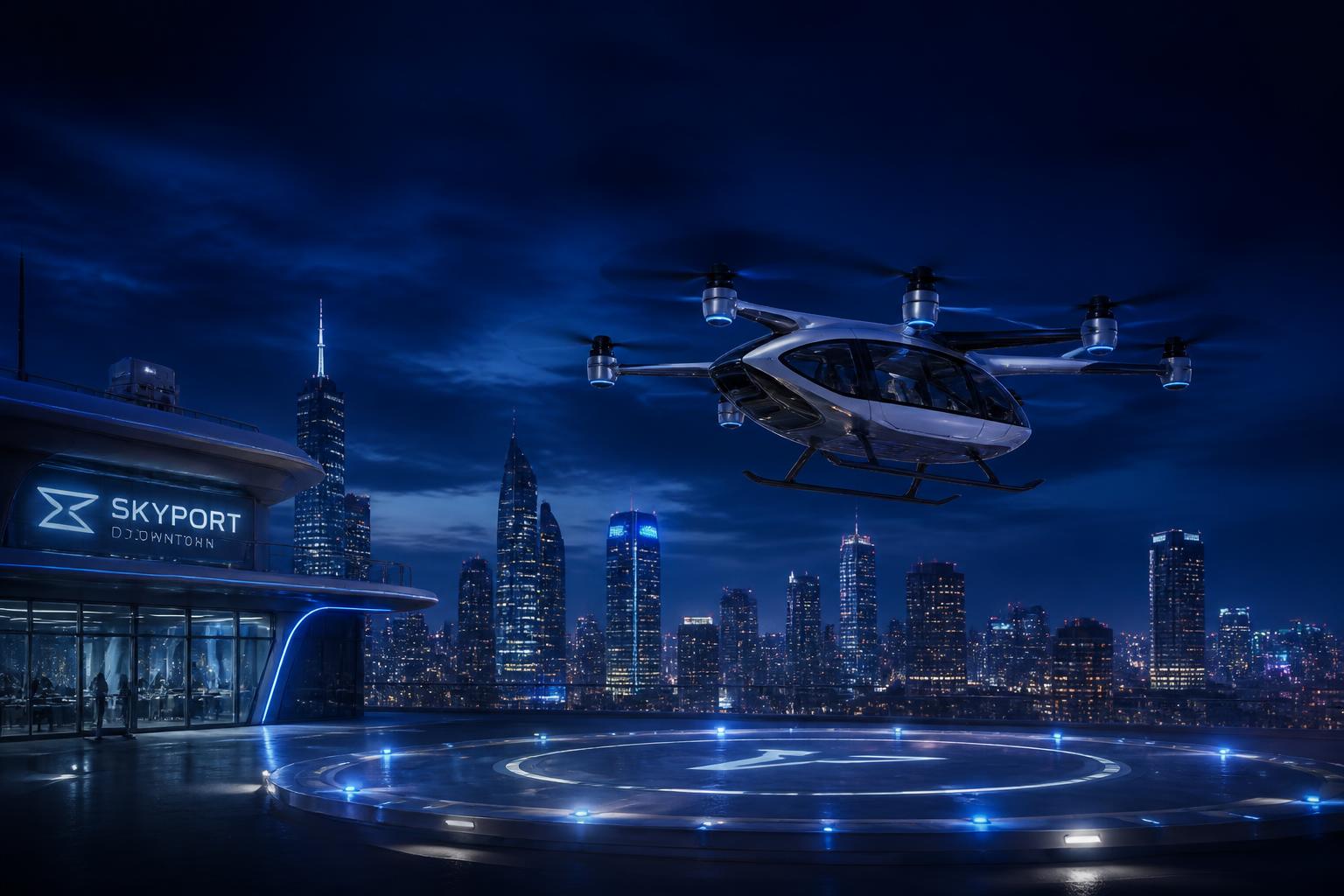
A vertiport pad can serve one movement at a time. Demand does not arrive one movement at a time.
M.K.K. Enterprises · Virtual Highway System
VHS is a deterministic aviation decision core designed to produce traceable, replayable access decisions for protected transition infrastructure.
Governing rule
No valid reservation — no access.
A reservation is only valid when the access node is approved, the aircraft is authorized, the requested window is current, the applicable policy conditions are met, and no conflicting movement holds the same Transition Volume.
Powered-lift aircraft, rotorcraft and uncrewed platforms will share a small number of approved surfaces. The point of failure is not the open sky — it is the narrow volume directly above the pad, where every departure, arrival and go-around competes for the same few seconds.
VHS decides who may enter a protected Transition Volume, when entry occurs, who must HOLD, and when access is denied — and records the evidence behind each outcome. It does not fly the aircraft, own the vertiport, or replace air traffic control or UTM.
Transition-access decisions, reservation validity, conflict evaluation, evidence and deterministic replay.
Aircraft manufacturing, flight control, fleet management, corridor ownership, autonomy, air traffic control and UTM.
Every access decision follows the same ordered path. Nothing skips a step, and nothing is decided by probabilistic inference — no model, and no AI, stands between a request and its outcome.
One aircraft. One defined Transition Volume. One bounded reservation window.
Space, time and aircraft authorization are bound together into a single controlled access allocation. The transition region is not a geofence drawn around a pad — it is treated as a reservable operational resource, with reservation states (AVAILABLE, RESERVED, ACTIVE, RELEASED) kept distinct from the access decision itself.
An operator requests a time-bounded reservation for entry into one specific Transition Volume.
The access node, the aircraft authorization and the reservation are validated. Anything unverified is treated as invalid.
Physical conflict is evaluated first, then the applicable timing and policy conditions — before any priority consideration.
The engine issues one deterministic outcome: GRANT, HOLD or DENY. Nothing is inferred, and UNKNOWN never becomes access.
Inputs, ordering, policy version and reason are recorded as the authoritative account of the decision.
The recorded sequence can be reconstructed deterministically, so a reviewer sees exactly what the engine saw.
Presented as ACCESS GRANTED. Entry is authorized for one reserved, time-bounded window in one Transition Volume.
Not a failure and not a penalty: the transition-access conditions are not satisfied right now, so the request waits its turn.
Entry is refused. An invalid, expired or conflicting reservation never becomes access.
One defined Transition Volume. One authorized aircraft. One bounded interval. Conflicting aircraft do not receive simultaneous access to the same protected resource: one enters, another HOLDs, and the reservation is never overlapped. Emergency and priority handling is expressed as governed policy conditions inside that sequence — not as a separate outcome.
VHS treats the climb out of a vertiport as engineered infrastructure rather than open airspace. The Transition Volume is a vertically oriented cylinder anchored to the access node; the merge is a separate lateral path into a structured corridor that continues beyond it.
The approved surface where a movement begins or ends.
A vertically oriented, digitally defined cylinder above the pad, reservable by one authorized aircraft for one bounded interval.
The engineered lateral path from the top of the Transition Volume into the corridor.
The directional route the aircraft joins after access, continuing beyond the merge point.
VHS is fail-closed by design. If the reservation, the aircraft or the access node cannot be verified, the outcome is HOLD or DENY — never access by default. Existing systems plan, authorize, monitor and provide airspace awareness; VHS is focused on one question at the boundary: who enters the protected Transition Volume, and when.
VHS is manufacturer-, operator- and aircraft-class neutral. Powered-lift aircraft, rotorcraft and commercial uncrewed platforms are evaluated against the same reservation, conflict and evidence requirements.
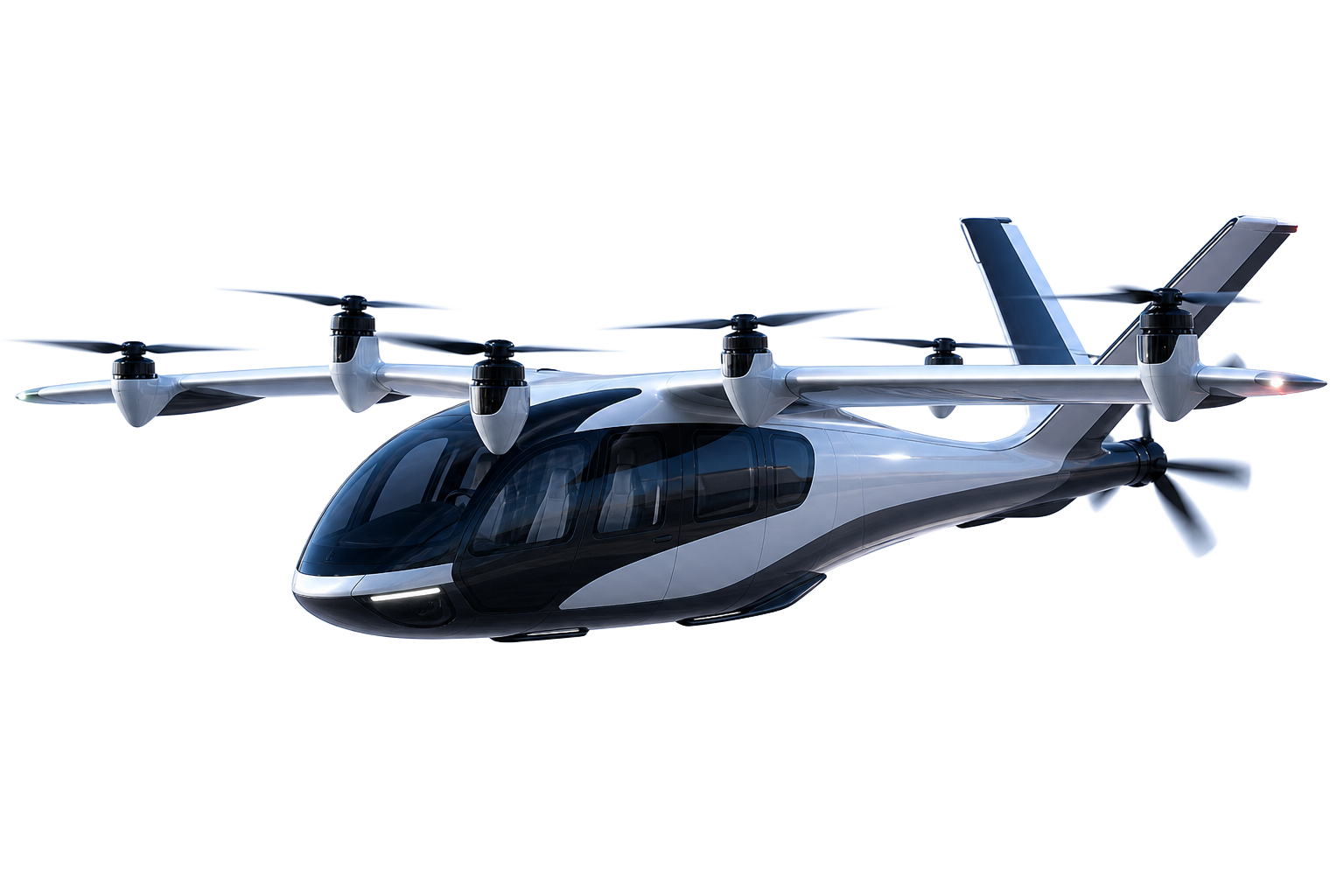
Distributed-lift passenger and cargo aircraft transitioning vertically out of a vertiport.
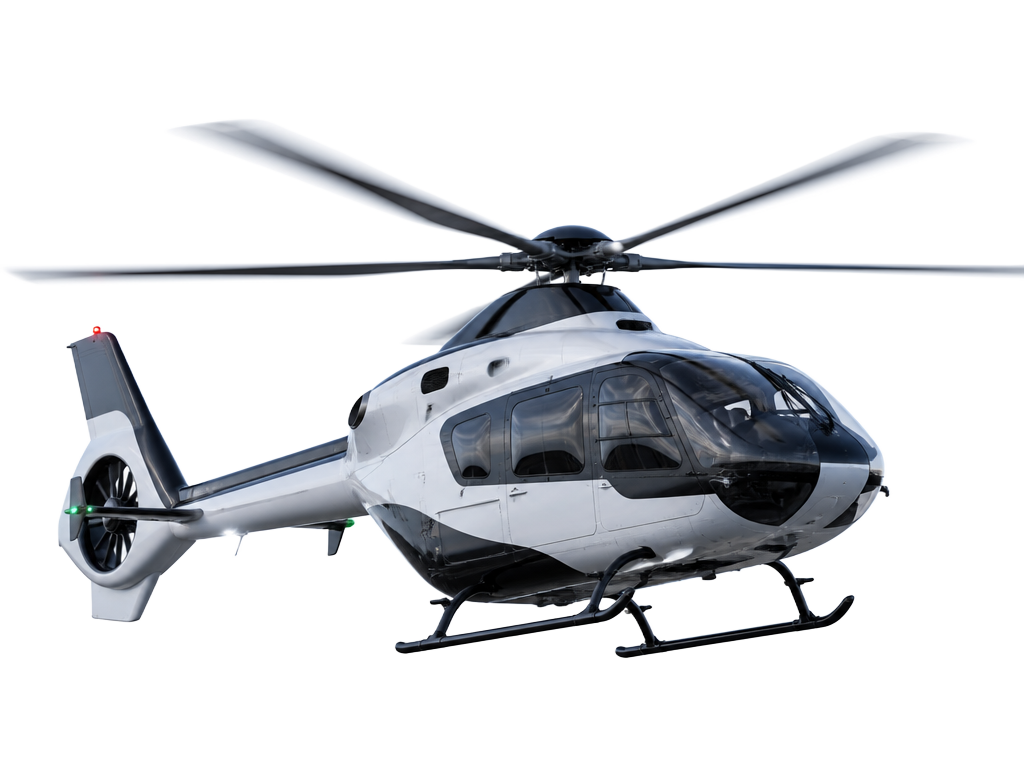
Existing civil, utility and emergency-services helicopters using the same access node.
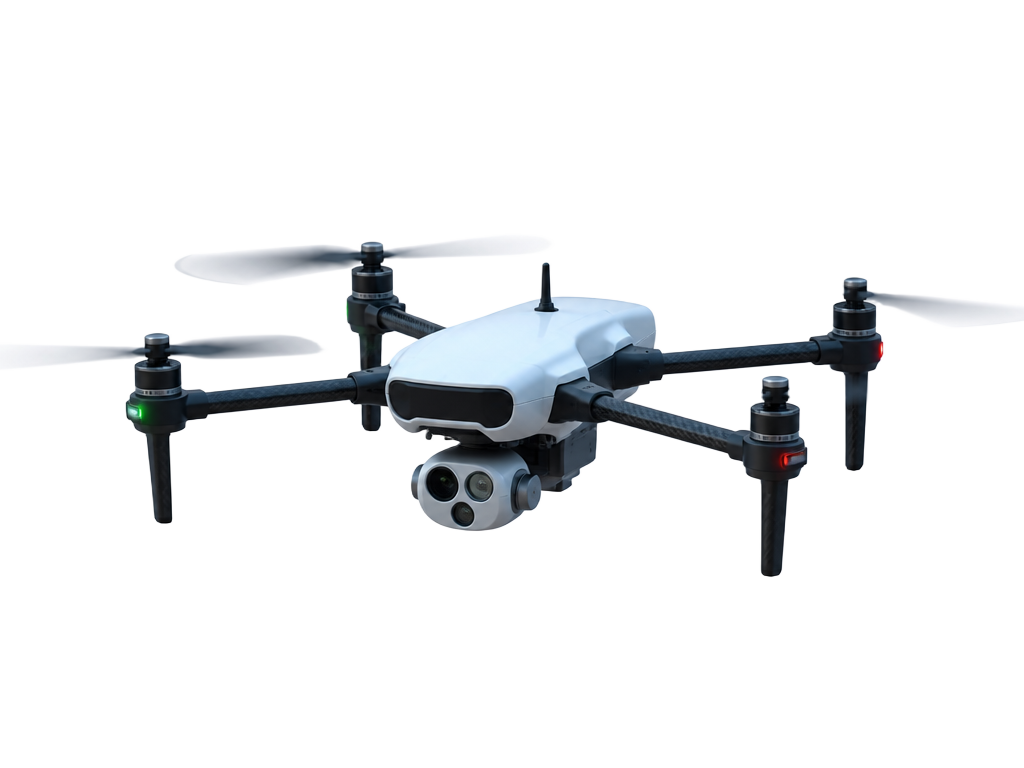
Uncrewed inspection, logistics and survey platforms operating in the same transition volume.
The VHS Engine page presents the operating sequence, a guided canonical demonstration, and the evidence recorded behind each outcome.
Provisional patent application filed — patent pending. The patent-pending architecture concerns exclusive, time-bounded transition-access control and the related coordination and visualization architecture.
Access is granted for one reserved, time-bounded window — not indefinitely.
Physical conflict is evaluated before any priority consideration is applied.
Each outcome carries the reason and the ordered events that produced it.
Transition Volumes and merge paths are configured per vertiport, not assumed identical.
VHS treats the record as part of the decision, not as logging added afterwards. Each authoritative outcome can be explained in operational language, evidenced by the inputs and ordering that produced it, and reconstructed step by step.
Every outcome carries the governing reason — conflict, reservation validity, or condition — in the same vocabulary used by the engine.
The recorded facts include the ordered events, the policy version applied, and the deterministic clock reference.
The same recorded sequence replays to the same outcome, so a reviewer verifies rather than trusts.
Prototype stage. Evidence and replay are demonstrated in the VHS Engine on canonical scenarios; no live aircraft operations, certification or field validation are claimed.
M.K.K. Enterprises is speaking with investors, aviation advisors, technical reviewers, vertiport and infrastructure developers, public-sector stakeholders, operators, and advanced-air-mobility ecosystem partners.