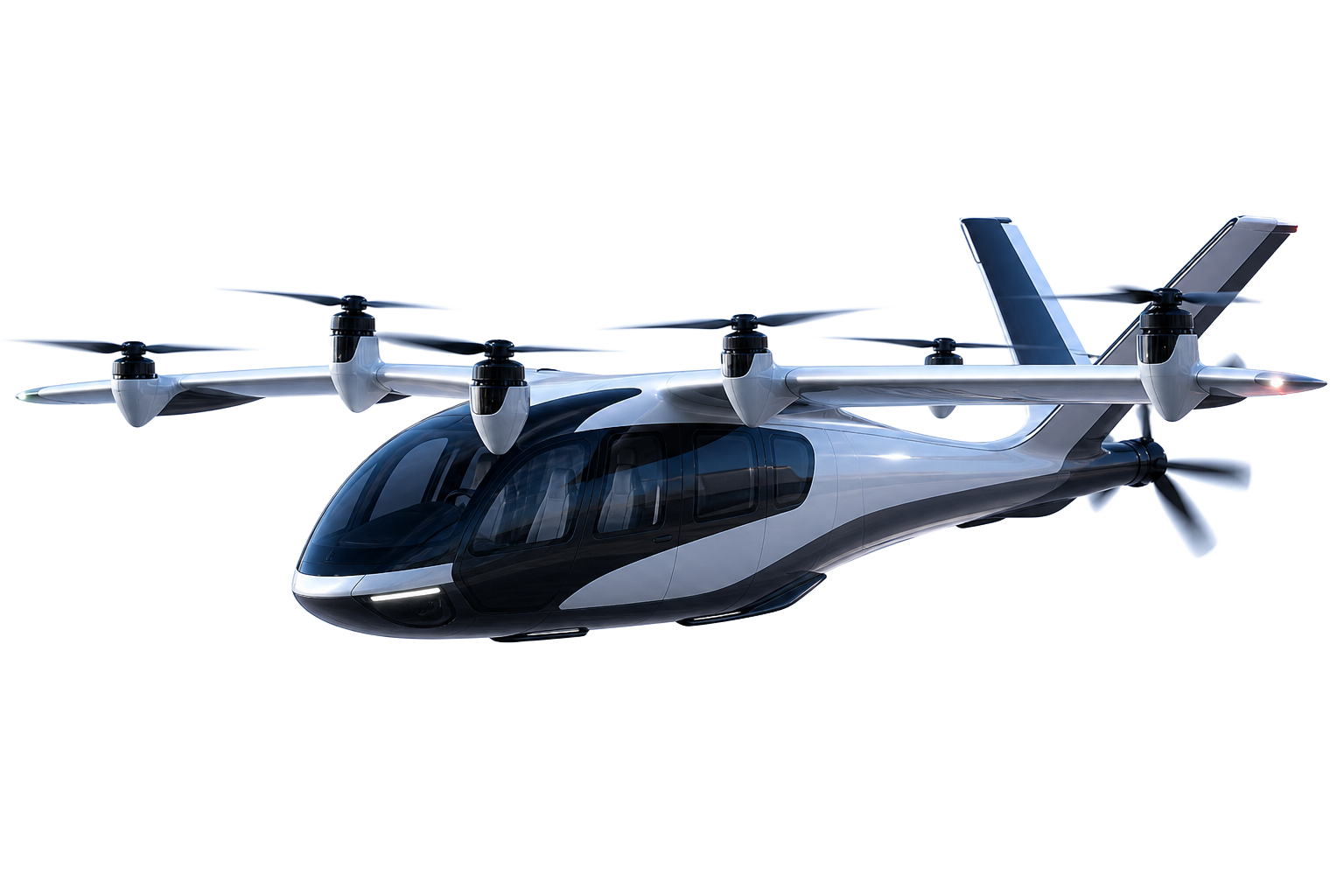
Powered-lift / eVTOL
Distributed-lift passenger and cargo aircraft transitioning vertically out of a vertiport.
Aircraft moving between an access node and shared structured airspace pass through a narrow, high-consequence region where movements converge. VHS places deterministic access control on that boundary — and nowhere else.
No valid reservation — no access.
Patent-pending architecture for exclusive, time-bounded transition-access control. Provisional patent application filed.
The Transition Volume and the structured corridor are separate resources. VHS governs entry into the volume above the access node. It does not own, route or control the corridor network beyond the merge.
The approved surface where a movement begins or ends.
A vertically oriented, digitally defined cylinder above the pad, reservable by one authorized aircraft for one bounded interval.
The engineered lateral path from the top of the Transition Volume into the corridor.
The directional route the aircraft joins after access, continuing beyond the merge point.
The protected transition region is not a drawn geofence. It is a resource that only exists as a combination of where, when and who — and access is evaluated against all three before use.
One aircraft. One defined Transition Volume. One bounded reservation window.
Space plus time plus an authorized aircraft is one controlled access allocation. This is not a geofence drawn around an area — it is a reservable operational resource.
Decision labels are fixed vocabulary. Colour reinforces the label; the label alone is always sufficient.
Required conditions are satisfied. The operation is authorized into the reserved Transition Volume for its bounded window.
The request is valid, but the resource is not available under present conditions. Not a refusal — not now. The aircraft waits outside the boundary.
The request cannot be authorized. Entry is refused, and the refusal is recorded with its reason.
A structured operation requests access to a defined Transition Volume for a defined window.
Identity, reservation, timing and the applicable versioned policy inputs are checked.
Applicable conflict and access conditions are evaluated against the current resource state.
The deterministic authority returns exactly one outcome: GRANT, HOLD or DENY.
The decision, its inputs and the reason for the outcome are recorded as facts.
The same recorded inputs and versioned authorities reproduce the same decision for inspection.
Two aircraft. One Transition Volume. Step through the sequence to see how a request becomes a deterministic decision, how the protected resource changes state, and what evidence remains afterwards.
A requested TV-01 for a defined window and the applicable conditions were satisfied at evaluation. The allocation binds one volume, one interval and one authorized operation.
Authorized into TV-01 for its reserved window.
No request submitted at this point in the sequence.
Resource states are drawn with dashed outlines; decisions are drawn as solid, colour-coded chips. is never a fourth decision, and is never a resource state.
This is an explanatory visualization of an authored illustrative sequence. It is not a live system, it issues no operational decisions, and it does not claim certification, approval or field validation.
No valid reservation — no access.
The architecture is built around explicit access authority rather than assumed permission. If the required conditions cannot be established, the protected transition is not treated as authorized. Unknown never becomes GRANT.
Built to be checked, not just believed.
The same authoritative inputs, plus the same versioned rules and conditions, produce the same decision. Each decision is recorded with its inputs, ordering, applied policy version and reason, so the sequence can be reconstructed later. No probabilistic, generative or inferential model sits in the decision path.
The story above stands on its own. These six exhibits carry the second layer of technical depth — geometry, 4D allocation, contention, evidence, the pending architecture and where VHS sits in the wider aviation system.
These are not features. They are the constraints the architecture holds itself to, stated so that a reviewer can check each one against the engine rather than take it on trust.
Powered-lift / eVTOL aircraft, rotorcraft and commercial UAS are evaluated against the same volume, the same reservation model and the same conditions. Class-specific performance is an input, never an exception. Certification, flight characteristics and regulatory requirements differ by class; the transition-access coordination mechanism is what they share.
Distributed-lift passenger and cargo aircraft transitioning vertically out of a vertiport.
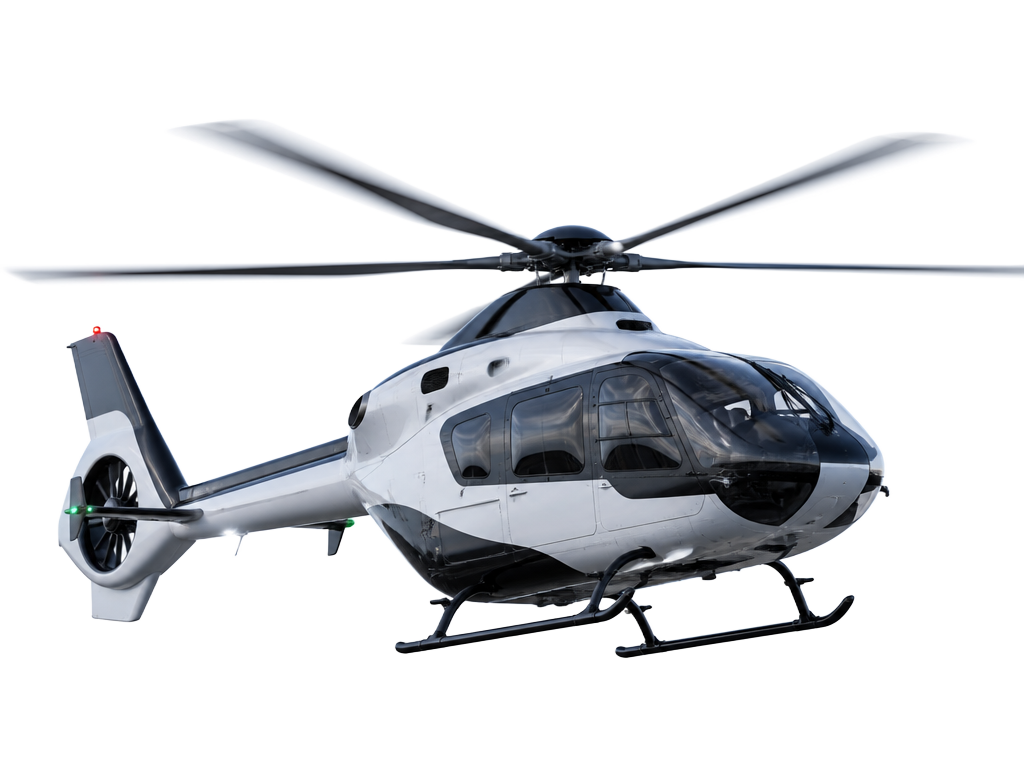
Existing civil, utility and emergency-services helicopters using the same access node.
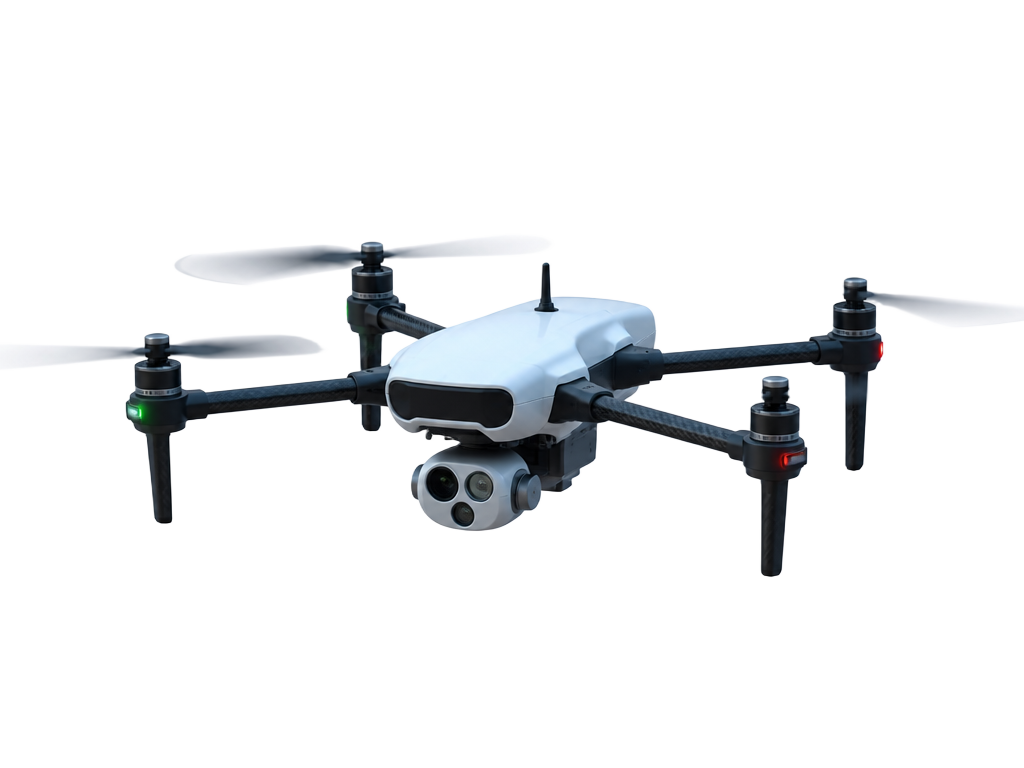
Uncrewed inspection, logistics and survey platforms operating in the same transition volume.
The architecture above is implemented in software you can watch decide. What follows is the honest boundary around it.
VHS is prototype-stage. It is not certified, not FAA-approved, not operationally authorized, not deployed in live aviation operations and not controlling real aircraft. Geometry, altitudes, spacing and related parameters shown anywhere on this page are illustrative reference configurations, configurable per site and approved operating context. Provisional patent application filed — patent pending.
Each of these is answered in the Q&A diligence layer, where the edge cases, lifecycle detail and integration questions belong.
Deeper technical material sits in the resources layer; security-sensitive interfaces and implementation detail are reserved for direct technical review.
The architecture on this page is implemented in a working decision core. The VHS Engine runs the scenarios, issues the outcomes and records the evidence described above.